
The Silent Revolution in Healthcare AI
The quietest revolutions in technology rarely make headlines.
Sometimes, they don’t involve shiny new apps or groundbreaking models, but the invisible work behind the curtain: data quality.
This is the story behind the OneMedNet–Medcase partnership, a collaboration designed not to reinvent AI itself, but to improve the data that feeds it.
This partnership showcases how healthcare data annotation is driving innovation in medical AI and real-world healthcare data pipelines.
As AI continues to transform healthcare, from radiology to diagnostics, the biggest challenge becomes trustworthy, annotated data. And that’s where this alliance changes the game.
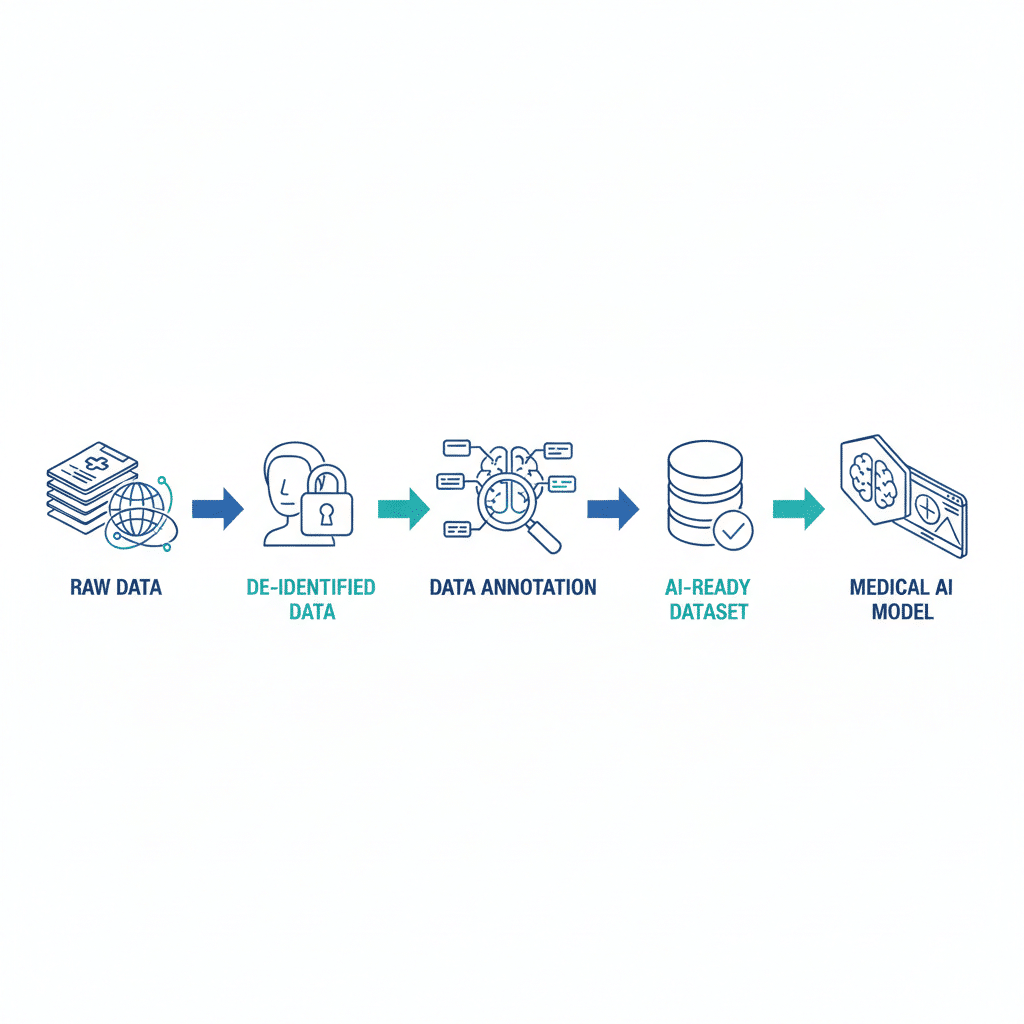
In essence, the partnership unites OneMedNet’s iRWD™ (intelligent Real-World Data) platform with Medcase’s network of 15,000+ medical professionals, creating a pipeline of clean, expertly labelled, and ethically managed healthcare datasets.
This is the infrastructure that makes breakthroughs possible.
The Power of Data Annotation
What Healthcare Data Annotation Really Means
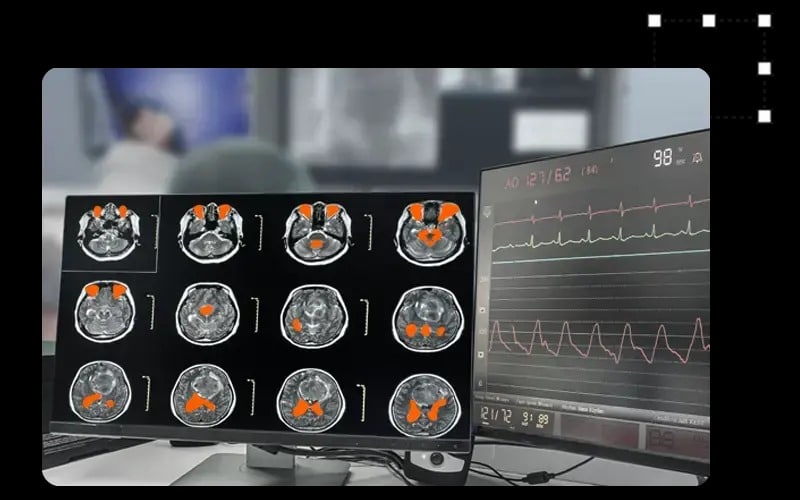
Healthcare data annotation is the process of labelling complex medical data, images, clinical notes, lab reports, and EHRs, so AI systems can learn to interpret them accurately.
But in medicine, annotation isn’t just labelling pixels or tagging keywords. It’s about contextual understanding.
Clean, structured healthcare data annotation ensures AI systems perform reliably across medical imaging, diagnostics, and EHR analytics
AI models are powerful pattern recognizers, but they lack empathy, intuition, and domain knowledge.
That’s why this partnership matters; it represents a commitment to responsible data automation, not replacement.
AI learns better when data is annotated more intelligently.
The OneMedNet-Medcase Partnership Explained
Who Are OneMedNet and Medcase?
- OneMedNet Corporation specializes in real-world data (RWD) aggregation and curation. Their iRWD™ platform transforms raw, de-identified clinical data into usable intelligence for AI developers, researchers, and healthcare organizations.
- Medcase operates a global network of clinicians who annotate and validate medical data, ensuring quality, compliance, and interpretive accuracy.
How This Collaboration Enhances Real-World Medical Data
By joining forces, these two players are closing the gap between data supply and data reliability.
Medcase’s human expertise now enhances OneMedNet’s vast, structured RWD pipeline, producing annotated datasets ready for ethical AI model training.
This partnership redefines what “AI-ready data” means in healthcare.
Why Data Annotation Matters More Than Ever
AI adoption in medicine has reached an inflection point. Regulatory scrutiny, ethical expectations, and patient safety all depend on transparent, auditable data pipelines.
While full automation alone can’t ensure clinical precision, AI-driven healthcare data annotation pipelines supported by expert review deliver the best of both worlds: scalable automation with ethical oversight.
This partnership celebrates precision over speed and quality over quantity, the foundation of responsible AI.
From Flashy AI Models to Clean Data Pipelines
For years, healthcare AI’s spotlight has been on model performance, radiology assistants, predictive algorithms, and digital twins.
But the real question isn’t how smart a model is, it’s how clean its data is.
The industry is shifting from model-centric AI to data-centric AI, where the competitive advantage lies in how well your data is collected, labelled, and governed.
Clean data is the new competitive edge.
This partnership embodies that shift, showing that the real innovation happens before the model is even trained.
Key Advantages of the OneMedNet-Medcase Alliance
1. Domain Expertise at Scale
You can’t crowdsource medical meaning. With Medcase’s global clinician network, OneMedNet gains access to domain-informed data annotation that aligns with clinical standards and real-world applications.
2. Regulatory-Grade Trust
AI models in healthcare must meet stringent ethical and safety standards. Governed data annotation pipelines build audit-ready, traceable datasets that can stand up to regulatory review.
3. Market Momentum
The healthcare data annotation market, valued at $1.5 billion in 2025, is expected to nearly double by 2030.
This signals growing recognition that AI quality = data quality × human expertise.
4. Pipeline Precision
From de-identified data to AI-ready insights, the OneMedNet–Medcase workflow creates a seamless annotation pipeline, which is the true infrastructure of healthcare AI.
The $1.5B Data Annotation Market
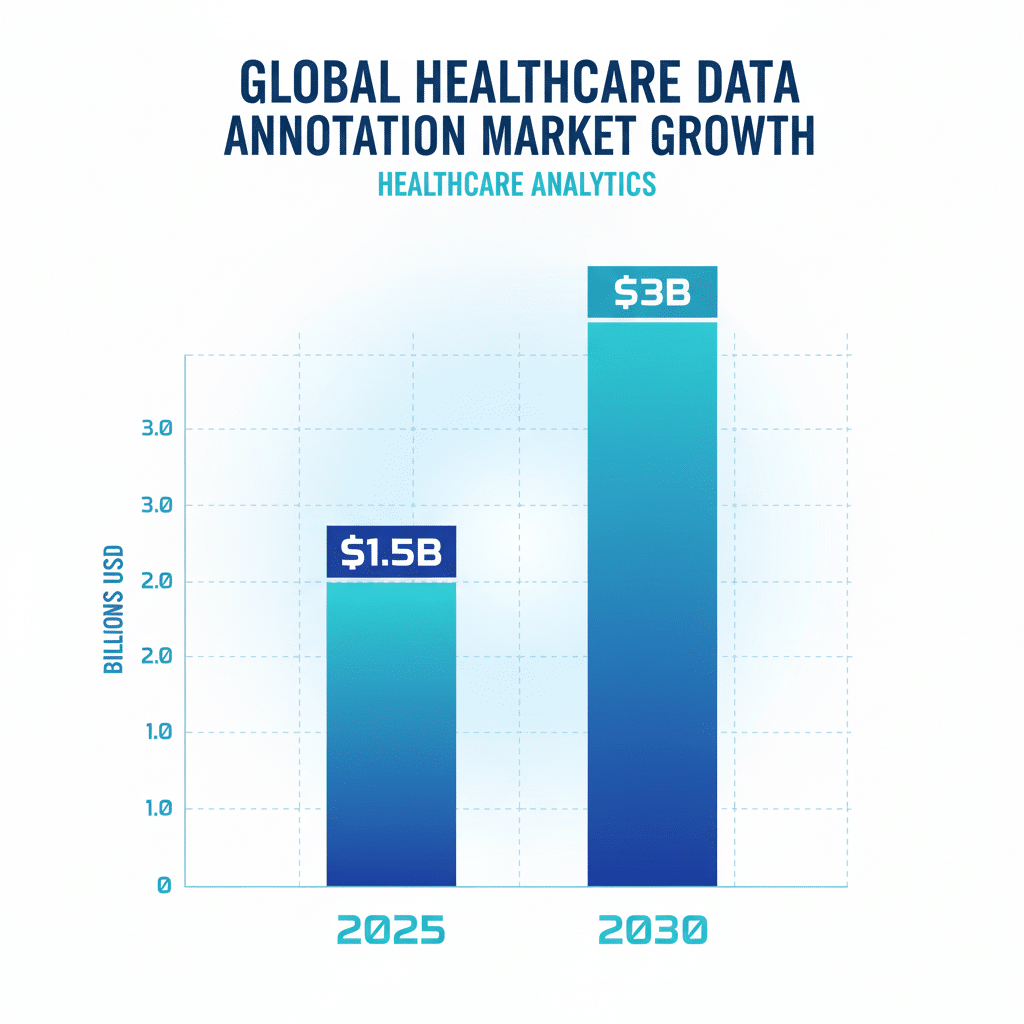
Healthcare annotation has become one of the fastest-growing sub-sectors in AI infrastructure.
Drivers include:
- Expanding diagnostic imaging volumes
- AI adoption in life sciences and drug discovery
- Stricter data governance requirements
- Demand for real-world clinical datasets
By 2030, analysts project the healthcare data annotation market will surpass $3 billion, led by automated, human-in-the-loop pipelines.
The Role of De-Identification and Privacy

Every data point used in AI training carries patient information and, therefore, ethical risk.
That’s why de-identification and data governance are critical.
OneMedNet’s iRWD™ platform ensures every dataset is fully de-identified before annotation, preserving both compliance and patient privacy.
The result? Datasets that are useful, lawful, and ethical, the holy trinity of medical data science.
AI-Powered Data Annotation Pipelines
When AI-driven annotation tools meet domain-informed validation, the result is transformative.
Automated systems deliver speed and consistency, while governance frameworks ensure integrity and context remain intact.
This partnership underscores a future where AI annotation enhances human judgment, rather than replacing it..
How Annotiq Interprets This Shift
At Annotiq, we’ve long argued that AI is only as ethical as its data pipeline.
This partnership validates that belief, proving that automated healthcare data annotation is the bedrock of responsible AI.
Our mission is to automate and accelerate healthcare data annotation with built-in governance and quality controls, aligning directly with the industry’s move toward scalable, ethical annotation frameworks.

The winners in healthcare AI will be those who can scale precision, not just volume.
The Future of Healthcare Data Annotation
Looking ahead, expect data annotation to become the core discipline of AI ethics and accuracy.
Hospitals, startups, and research labs will increasingly depend on curated, AI-powered annotation and human-reviewed datasets to train systems that impact real lives.
Future innovations will likely include:
- Context-aware labelling tools with built-in compliance monitoring
- Hybrid annotation frameworks blending human review with AI pre-labelling
- Quality-assurance dashboards for clinical oversight
Case Scenarios
Example 1: Radiology Annotation
An AI trained on expertly annotated imaging data identifies subtle anomalies missed in generic datasets, improving early detection rates by nearly 12%.

Example 2: EHR-Based Predictive Analytics
AI-driven annotation of EHR data reduces demographic bias, improving fairness in predictive outcomes for chronic diseases.
Common Myths About Data Annotation
Myth 1: Annotation is fully automated.
→ False. The best systems combine AI automation with governance-based validation
Myth 2: Data annotation slows progress.
→ In reality, automated healthcare data annotation pipelines prevent costly errors and accelerate regulatory approval.
Myth 3: Labelling doesn’t affect model performance.
→ Clean, governed annotation can improve model accuracy by up to 30%, especially in medical imaging.
Key Takeaways
- Healthcare data annotation is the backbone of healthcare AI.
- Ethical AI starts with clean, auditable and automated data pipelines.
- The OneMedNet–Medcase partnership signals a maturing AI industry from hype to hygiene.
- The future belongs to human-verified data, not just synthetic scale.
FAQs
1. What is healthcare data annotation?
It’s the process of labelling medical data (images, EHRs, or clinical text) to train AI systems with accurate context and meaning.
2. Why is healthcare data annotation important for AI?
Because healthcare data annotation provides the structured, clinically relevant data that AI models depend on for accuracy, fairness, and regulatory compliance.
3. What makes the OneMedNet–Medcase partnership unique?
It merges real-world medical data with domain-expert annotation at scale to create high-quality, AI-ready datasets, a rare combination in the industry.
4. How does this improve AI ethics?
Automated governance ensures transparency, fairness, and regulatory compliance throughout the data annotation pipeline.
5. What is iRWD™?
It stands for “intelligent Real-World Data”, OneMedNet’s proprietary platform for collecting and curating de-identified medical data.
6. Will human annotation be replaced by AI?
Fully replaced? No. But AI-driven annotation systems now handle most of the labelling work, supported by governance and expert validation.
The Maturing AI Conversation
Maybe this is how the AI era grows up, less hype, more hygiene.
Less “look what our model can do,” and more “look what our data made possible.”
The future of healthcare AI won’t be written by algorithms alone.
It’ll be powered by AI systems trained through precise, ethically managed healthcare data annotation, guided by experts who understand both the science and the stakes.